
Have you ever wondered how people can declare themselves to be bloggers and their social media shows them always travelling and they never seem to be working? Unless they’re selling foot pics on the side, there’s a good chance that they’ve found a way to monetise their blog.
There are a few different ways it’s possible to monetise a blog. Check out the different revenue models below and find out how you can make money by blogging.
Ads
In the same way that companies pay newspapers to print their adverts, advertisers will pay you to gain access to the audience visiting your website. Naturally, the more popular your blog, the more you can earn through ads as you’ll attract a larger audience and space on your page will become more of a premium.
To get ads on your blog website you can either reach out to companies directly with a proposition, wait for them to headhunt you as your website shows up in search engines, or the easiest way is probably to sign up to a network such as Google AdSense for example. Ad networks will sell your ad space on your behalf and will post specific ads based on their relevance to your content.
Typically you’ll be paid by a company or agency when a user views or interacts with the ad.
Affiliate Marketing
According to GlassDoor, the average salary of a professional affiliate marketer is around GBP £49,000 ($59,000) per year! Technically a source of passive income, affiliate marketing is an excellent way to keep the money coming in from your blog.
Affiliate marketing works by you including links on your website, usually in your content, to a product or service offered on another website. Then when someone purchases the product or service through your link you receive a commission.
For bloggers this typically entails directly recommending a product or service in your content to an engaged audience who visit your blog for specific information or advice. As a result, affiliate marketing is usually a fairly viable way of monetising your blog.
To get affiliate links on your website, you can join an affiliate program such as Rakuten Marketing or CJ Affiliate. There are tons of programs out there and each has their own benefits, with some focusing on specific industries. So it’s a good idea to do your research and find the right program for your blog.
Another thing to be careful of is transparency. In some countries it’s actually a legal requirement to declare your use of affiliate links to your audience so they’re aware of the marketing they’re being subjected to.
Sales
Many bloggers make money by selling products in an online store, either physical or digital. You don’t have to have a creative business selling scented candles through Etsy to make this work. As an example, if you have a travel blog, you could sell clothing or other merchandise with your logo, destination place names or city skylines. It’s an extra way to make money from your audience, and if they’re wearing the merch out and about, it’s free advertising! With physical products you would need to bear in mind storing stock, shipping, and any potential duties and taxes involved in exporting goods.
Alternatively, you could sell digital products such as ebooks on travel destinations or one-to-one guidance sessions between you and your customer. The possibilities are endless. Digital products are definitely less of a faff to sell, but you still need to organise a way to receive payments from customers. This may be as simple as a website plug-in, but it’s still worth considering before you head down the sales route.
Subscriptions
If your blog website has regular visitors who keep coming back to view your content, why not offer them premium content, set up an online community for your followers, or provide premium services or tools for subscribers?
By setting up a subscription service, bloggers can receive a regular and more reliable income stream as readers typically pay monthly or annually.
To set up a subscription for your customers you’ll need to consider a membership model and market it effectively. Make sure you know what you’ll be offering your subscribers well in advance and keep it consistent to keep them wanting to pay each month.
Coaching / Programs
If you have some sort of expertise, such as website design for example, you could offer your blog readers training to create their own website. This could be done with bespoke training on a one-to-one basis or through regular online programs with allotted spaces customers can take part in.
If you’re offering one-to-one coaching packages, you will obviously be dedicating a specific amount of time to your client. You could offer them a set number of hours during their course with you, or promise to help them reach a certain goal by a certain time. Either way, bespoke coaching where your client gets your full attention will be a high-ticket sales item for you.
Alternatively, with online programs people can sign up to, you’re more likely to be able to coach multiple clients in one go, leading to more income per course.
With either option, offering readers courses where they can learn how to do something you’re an expert in will require a specific amount of marketing and planning. However it’s definitely a reliable source of income for bloggers if you’re willing to put in the effort!
So in essence…
Whether you choose to focus on and master one stream of monetising your blog, or you build a repertoire of different income streams based on your blog, you can definitely create a reliable and beneficial income from blogging.
If you have any questions, need help starting a blog, or want to boost your current site to make it profitable, send me a message!
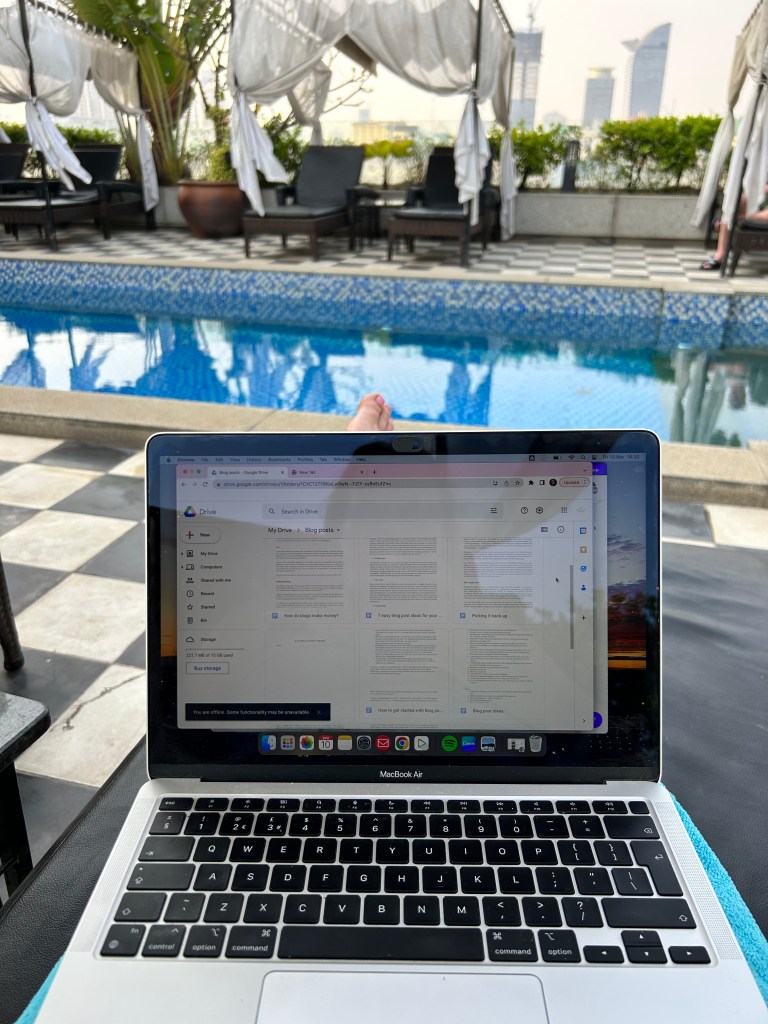
My ‘office’ in Phnom Penh, Cambodia last week.
Discover more from Belvoir Media
Subscribe to get the latest posts sent to your email.
 Belvoir Media